

Solscan Explorer: A Practical, Slightly Opinionated Guide to Navigating Solana

Okay, so check this out—I’ve been poking around Solana explorers for years. Whoa! At first glance, they’re all the same: hash, slot, block. But actually, wait—Solscan makes a different bet. My instinct said it’d be gimmicky, but it kept surprising me with useful little features that matter when you’re debugging a failed transaction or vetting a token. Something felt off about how some other explorers bury context; Solscan doesn’t. Hmm… seriously, it’s that kind of consistent polish that keeps pulling me back.
Here’s what bugs me about many blockchain explorers: they assume you only ever need one perfectly formatted view, and if your problem isn’t that view, tough luck. Solscan treats exploration more like a toolbox. Shortcuts are visible. Decoded instructions sit where you’d expect them. Token metadata and NFT traits are front-and-center, not tucked behind ten clicks. I’m biased, but when I’m troubleshooting a wallet interaction at 2am (true story—New York timezone brain-fry), Solscan often gives me the answer faster than alternatives. And yeah, I try to be thorough—I check the official pages too.
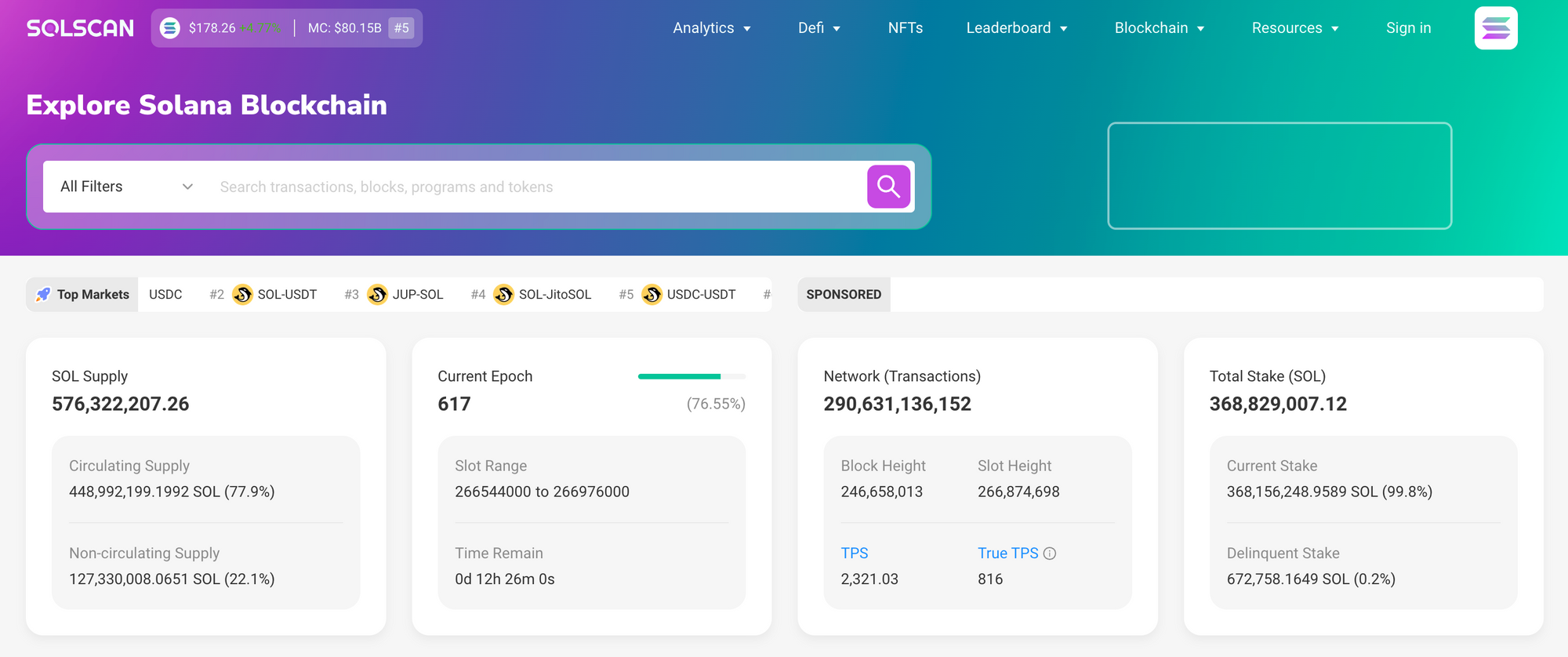
Why Solscan Feels Different
First impression: fast UI, lots of info. Really? Yes. The site is built to serve both power users and casual browsers. You get the high-level transaction summary in one quick glance, but if you want the nitty-gritty—accounts touched, instruction data, program logs—it’s a scroll away. Initially I thought it might be cluttered, but then I realized the layout is a series of progressive reveals; it scales to what you need. On the other hand, some pages can feel busy, though actually the density is useful once you learn where to look.
Okay, so here’s a practical tip: when you paste a transaction signature into Solscan’s search, pay attention to the “Inner Instructions” and “Log Messages” sections. Those often contain the exact failure reason—out of funds, instruction error, or a custom program revert. That saved me from opening the program source a dozen times. Also, the token pages give holder distributions and transfers trends, which are very very important when you’re assessing rug risk.
Serious note—if you manage NFTs, Solscan’s collection views let you peek at metadata and track listings quickly. On several occasions I spotted mismatched metadata that tipped me off to a lazy minter script. Not definitive proof of fraud, but a red flag. My gut feeling said “watch this collection,” and the explorer gave me the breadcrumbs to investigate further.
Hidden Features and Power Moves
Whoa! There’s more than meets the eye. You can filter transactions by program, which is a fast way to audit activity around a smart contract. You can also inspect account states—so if you’re curious about token balances inside a program-owned account, there’s usually a decoded layout to examine. Initially I thought this was only for devs, but honestly it helps regular users too. For instance, checking whether an escrow account has the expected tokens can prevent costly mistakes.
One trick I use: combine the search with the slot range selector to map activity spikes after a new release or announcement. It helps correlate on-chain events with off-chain news (oh, and by the way… keep your timestamps in mind—Solana slots are granular). On one project, this method exposed an airdrop claim script that was spamming transactions; catch that early and you save gas and headache.
Something I wish were smoother: transaction annotation across multiple explorers. Sometimes a program’s logs are clearer elsewhere. But Solscan’s UX for copying raw transaction data is solid, and you can port that quickly to a local decoder. Also, there are occasional UI quirks—tiny things that bug me—like inconsistent paging on very large token holder lists. Still, the core experience is reliable enough for daily use.
Okay fine—real talk: I use the site a lot, but I’m not married to it. I check multiple sources when in doubt. On one hand Solscan often gives me the right hint; on the other, official cluster explorers or devtools sometimes reveal different decoded fields. This is not a knock, but a reminder that explorers are interpretations of raw on-chain data, with their own heuristics.
How to Use Solscan Like a Pro
Start by searching with the basics: address, signature, or block. Then follow these steps:
- Scan the transaction summary for fee, success/fail, and programs invoked.
- Open the inner instructions; check for custom program errors in logs.
- Inspect token/account state for unexpected balances or authority changes.
- Use program filters to aggregate behavior across many transactions.
- When investigating tokens, review holder concentration and recent transfers.
These steps helped me avoid at least a few dumb mistakes. Seriously, it’s basic risk hygiene.
If you want the official entry point to the Solscan experience, I usually point people to this page: https://sites.google.com/cryptowalletextensionus.com/solscan-explorer-official-site/. It’s handy for bookmarks and quick reference, and it aggregates some of the docs I used while learning the quirks.
FAQ
Is Solscan safe to use for wallet checks?
Short answer: yes for viewing and researching. It never asks for private keys. But I’m not 100% sure about every third-party widget you might use from any site—so always keep keys offline and use hardware wallets for significant funds. Also, double-check any external links; explorers sometimes embed marketplace or aggregator widgets that lead off-site.
Can I rely on Solscan for debugging smart contracts?
Yes, it’s a strong first stop. The logs and decoded instructions will get you most of the way. For deep dives you’ll still need program source, local devtools, or RPC trace tools. On the bright side, Solscan reduces the number of blind alleys you chase.
What about NFT and token metadata reliability?
Metadata shown is only as accurate as on-chain pointers and off-chain hosts. Use Solscan to spot inconsistencies, but validate metadata against project repos or CID gateways when it matters. Again, not perfect, but a great triage tool.
Alright—closing thought. I’m excited about how explorers are evolving. Solscan isn’t flawless, but it strikes a pragmatic balance between power and accessibility. If you’re serious about using Solana—whether trading, building, or researching—it should be in your bookmarks. And yeah, I said that earlier, but repetition helps sometimes…